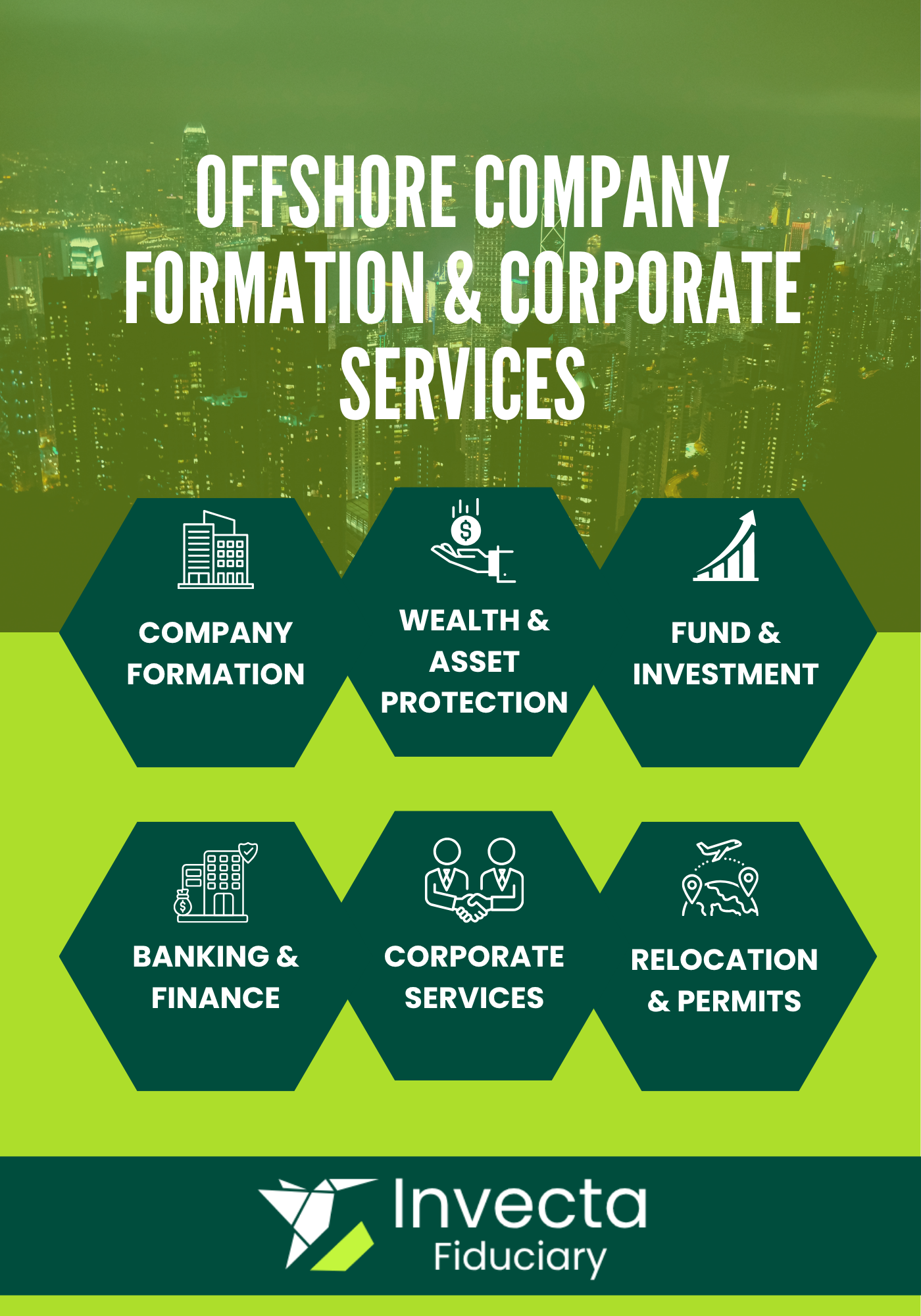


International Structuring Solutions for Global Businesses & Investors
Offshore company formation has evolved into a core component of modern international business strategy, cross-border investment planning, wealth structuring, international expansion, and global operational optimization. Entrepreneurs, multinational groups, investors, consultants, digital businesses, family offices, and internationally mobile individuals increasingly utilize offshore structures to improve operational flexibility, optimize international tax efficiency, strengthen asset protection frameworks, facilitate international banking access, centralize global investments, and support scalable international growth.
Contrary to outdated perceptions historically associated with secrecy-driven offshore models, modern offshore structuring is now fundamentally centered around governance quality, regulatory transparency, banking compatibility, economic substance, compliance resilience, and institutional credibility. Today’s sophisticated international business environment requires offshore structures capable of operating within increasingly advanced regulatory and banking ecosystems governed by AML/CFT frameworks, tax transparency standards, beneficial ownership rules, and international compliance obligations.
At Invecta Fiduciary, we assist international businesses, investors, entrepreneurs, and private clients in building governance-oriented offshore structures adapted to modern international financial environments. Our multidisciplinary approach combines corporate structuring, international tax awareness, compliance coordination, banking readiness, operational substance guidance, strategic advisory, and institutional financial integration within scalable frameworks designed for long-term international sustainability.
Rather than positioning offshore company formation as a low-cost administrative exercise, sophisticated international structuring should be approached as a strategic tool capable of improving institutional positioning, operational scalability, cross-border efficiency, banking credibility, and long-term international expansion capacity.
Why Businesses Use Offshore Companies
Modern offshore structures are increasingly integrated into broader international business and investment ecosystems designed to improve operational efficiency, governance quality, financial flexibility, and cross-border scalability.
International Tax Optimization
Offshore companies may support international tax optimization strategies when implemented within compliant international tax planning frameworks supported by operational substance, governance integrity, and regulatory alignment. Sophisticated international structuring increasingly focuses on sustainable tax efficiency rather than aggressive tax avoidance approaches.
International Holding Structures
Many multinational groups and investors utilize offshore holding companies to centralize:
Holding structures may improve governance coordination, operational oversight, investment management, and international expansion flexibility.
Asset Protection & Wealth Structuring
Offshore structures are frequently integrated into broader asset protection and private wealth planning environments involving trusts, foundations, family offices, and investment holding entities. Properly structured frameworks may help separate operational liabilities from personal or family-level asset ownership within legally compliant governance-oriented environments.
International Banking Access
International businesses increasingly require sophisticated banking environments capable of supporting:
Banking readiness has become one of the most important components of successful offshore structuring due to increasingly sophisticated AML/CFT and KYC standards.


Global Expansion & Cross-Border Operations
Offshore companies may facilitate international expansion strategies by supporting:
Businesses expanding into Africa, Asia, Europe, and the Middle East increasingly utilize internationally recognized offshore structures to reinforce institutional credibility and operational flexibility.
Most Common Offshore Company Structures
Different jurisdictions provide different legal structures adapted to varying operational, tax, governance, and banking objectives.
IBCs are commonly utilized for:
Jurisdictions such as Seychelles and the British Virgin Islands remain widely recognized for flexible IBC environments.
Mauritius has positioned itself as a sophisticated international financial centre providing governance-oriented international business structures frequently used for:
Mauritius increasingly attracts businesses and investors seeking institutional credibility, treaty access, banking compatibility, and governance-oriented structuring environments.
Holding structures are widely utilized to centralize ownership of:
Sophisticated holding structures are frequently integrated into broader international tax planning and corporate finance environments.
Trusts and foundations are frequently utilized for:
These structures are increasingly integrated into governance-oriented family office and private client ecosystems.
Offshore Jurisdiction Comparison
Jurisdiction | Main Strategic Advantages | Typical Use Cases |
Mauritius | Governance credibility, Africa access, treaty network | Holding companies, investment structures |
Seychelles | Flexible IBC regime, fast incorporation | Trading, consulting, digital businesses |
United Arab Emirates | Regional business hub, infrastructure | International trade, regional expansion |
Singapore | Institutional reputation, Asian financial centre | Fintech, international operations |
Hong Kong | International trade ecosystem | Commercial and financial operations |
British Virgin Islands | Corporate flexibility | Holding and investment structures |
Cayman Islands | Institutional investment ecosystem | Funds and private investment structures |


Offshore Banking & Financial Infrastructure
Modern offshore structuring cannot be separated from international banking realities. Financial institutions increasingly operate within highly sophisticated compliance ecosystems involving:
As a result, successful offshore structuring increasingly depends on governance quality, operational transparency, banking compatibility, and institutional credibility.
Businesses seeking international banking access should prioritize:
Weakly structured offshore entities frequently encounter banking restrictions, onboarding difficulties, or institutional credibility concerns.
Offshore Company Formation Process
01
Strategic Assessment
Analyze operational objectives, international expansion strategy, investor profile, tax considerations, banking requirements, and governance priorities.
02
Jurisdiction Selection
Identify the most suitable jurisdiction based on regulatory credibility, banking compatibility, operational requirements, and international scalability.
03
Corporate Structuring
Establish the legal entity and define ownership, governance, shareholder, and operational frameworks.
04
Compliance & Documentation
Prepare KYC documentation, source-of-funds verification, beneficial ownership records, and regulatory onboarding materials.
05
Banking & Operational Integration
Coordinate banking support, accounting infrastructure, operational readiness, compliance systems, and financial integration.
06
Ongoing Governance & Compliance
Maintain annual filings, accounting obligations, compliance requirements, tax reporting, and governance standards.
Why Mauritius for Offshore Structuring?
Mauritius has emerged as one of the leading international financial centres for Africa-focused investment structures, international holding companies, investment funds, family office ecosystems, and sophisticated cross-border operations.
Mauritius combines:
This positioning increasingly attracts multinational groups, investors, entrepreneurs, and private wealth structures seeking long-term sustainable international structuring solutions.
Common Offshore Structuring Mistakes
Ignoring Economic Substance
Weak Banking Preparation
Choosing the Wrong Jurisdiction
Poor Governance Frameworks
Aggressive Tax Structuring
Lack of Strategic Planning
Strategic Perspective
The future of offshore structuring increasingly belongs to businesses and investors capable of combining international flexibility with governance integrity, compliance resilience, operational legitimacy, and institutional credibility.
Modern offshore company formation is no longer simply about tax optimization or corporate registration. It has become part of a broader international business strategy involving:
Businesses that approach offshore structuring strategically are often better positioned to access international banking ecosystems, attract institutional counterparties, facilitate cross-border investments, optimize operational flexibility, and reinforce long-term global competitiveness.
At Invecta Fiduciary, we position offshore structuring as a governance-oriented international advisory discipline designed to support sophisticated international business environments rather than simple low-cost incorporations.
What is an Offshore Company?
An offshore company is generally a legal entity incorporated in a jurisdiction outside the owner’s primary country of residence or operational base. Offshore companies are commonly utilized for international business operations, investment holding, intellectual property ownership, international consulting services, global trading, wealth structuring, asset protection, and cross-border investment activities.
Offshore entities may be incorporated in jurisdictions such as:
The appropriate jurisdiction depends on multiple strategic factors including:
Sophisticated offshore structuring therefore requires strategic planning rather than generic incorporation approaches.